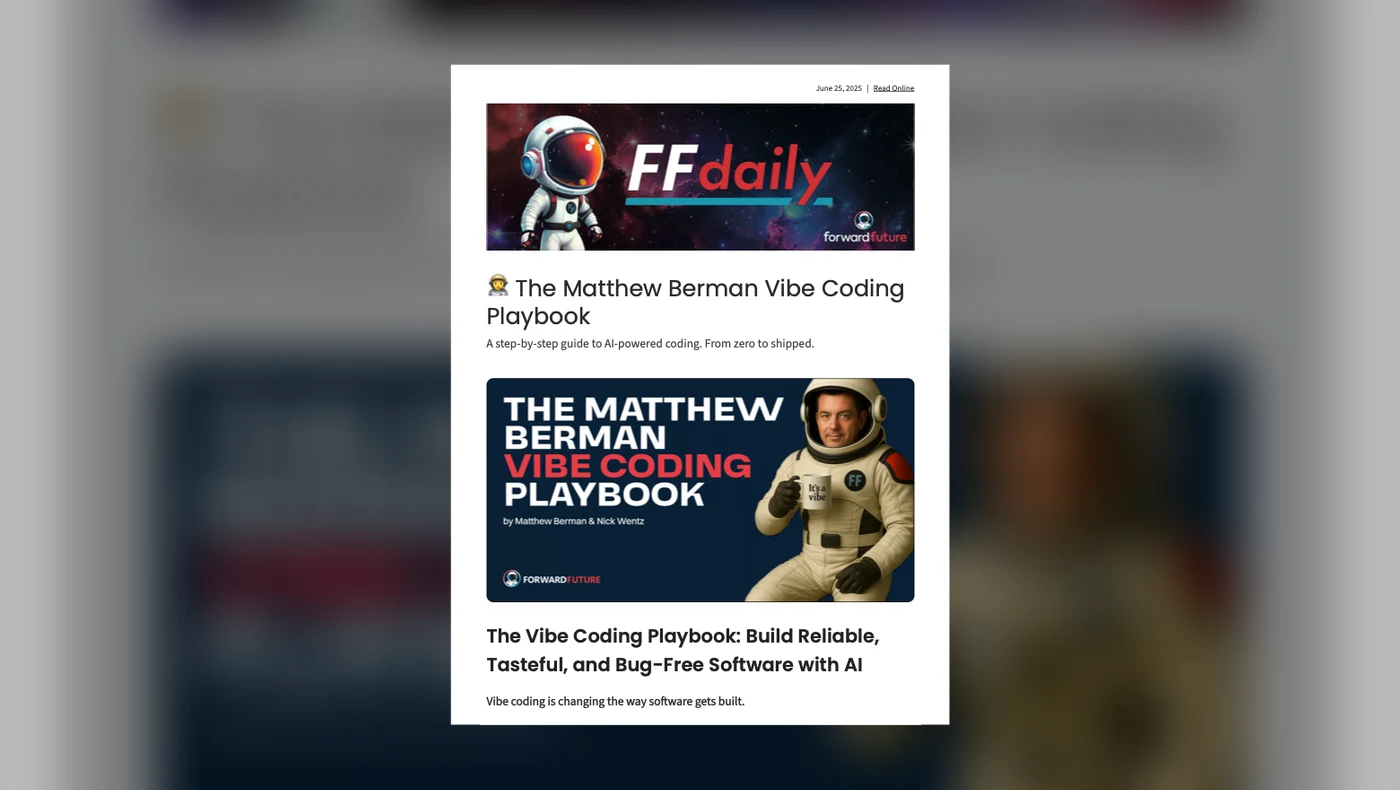
The Vibe Coding Playbook: Build Reliable, Tasteful, and Bug-Free Software with AI
Vibe coding is changing the way software gets built.
Fueled by AI copilots, intuitive IDEs, and rapid feedback loops, developers are shipping faster than ever—turning ideas into products with less friction and more flow. What used to take weeks now happens in hours.
It’s not just a trend. It’s a movement redefining modern software development.
But here’s the catch: with speed comes risk.
Without the right guardrails, vibe coding can lead to messy code, shallow understanding, and brittle systems.
That’s where this playbook comes in.
We’ll show you how to unlock the full potential of vibe coding without sacrificing reliability, readability, or sanity. Whether you’re working solo or with a team, this guide will help you build software that’s fast, functional, and built to last.
What You'll Learn
✅ Prompt like a builder
Use conversational instructions that get the AI to generate useful, readable code.
✅ Avoid the traps
Apply rules, workflows, and checklists that prevent messy logic and silent errors.
✅ Ship faster without blowing things up
Balance creativity with guardrails—iterate, test, and roll back when needed.
✅ Think like a system designer
Use planning docs, PRDs, and rule sets to align agents with your intent.
✅ Scale solo
Work like a full team—without needing one.

What’s Inside
Section 1
Defines vibe coding and why it’s reshaping modern development.
Section 2
Helps you choose the right tools (Cursor, Windsurf, Replit, etc.) and explains how to work with agents.
Section 3
Covers which stacks to use (and why popularity matters for AI).
Section 4
Lays out how to plan before you prompt, including writing a PRD and creating todo.md.
Section 5
Explains Git workflows—how to roll back, stash, and avoid chaos.
Section 6
Teaches how to write natural-language rules that guide your AI assistant like a senior dev.
Section 7
Breaks down the full vibe coding workflow from start to ship.
Section 8
Covers security and maintainability for real-world codebases.
Section 9
Shares debugging tactics, frontend tricks, and voice workflows.
Section 10
Explores advanced topics like Model Context Protocol (MCP).
Appendix
Includes survival guides, rulesets for popular stacks, security audits, and the complete tool index.

Good vibes for everyone! We’re giving the full Matthew Berman Vibe Coding Playbook away, 100% free. Just drop your email to get instant access. ⬇️
How to Use It
Start at the top. Sections 1–4 lay the foundation: mindset, tools, stack, and planning. Skipping them means skipping the point.
Bookmark Sections 6 and 7. That’s where the real workflow and rules live—come back to them anytime your AI goes off track.
Use the appendix like a cheat sheet. Debugging guides, rulesets, and tool indexes are there when you need a fast fix or a fresh prompt.
Don’t rush. Vibe coding is fast, but learning how to guide the AI well takes practice. Use this guide as a reference, not a read-once-and-done.
Adapt it to your stack. The core principles stay the same, but the examples and rulesets are designed to flex with your environment.
Why Prompt Engineering Matters
Vibe coding isn’t just using AI to write code. It’s a new development philosophy. You direct the system. The agent builds. And together, you ship real software at breakneck speed, without cutting corners.
It’s accessible, powerful, and already changing how developers think and work. You don’t need to be a 10x engineer. You just need a solid prompt and a clear plan.
Coding Is Changing. So Should You.
With the right tools, rules, and flow — you can ship better, faster, and with more joy. Grab the free guide and start building today.